

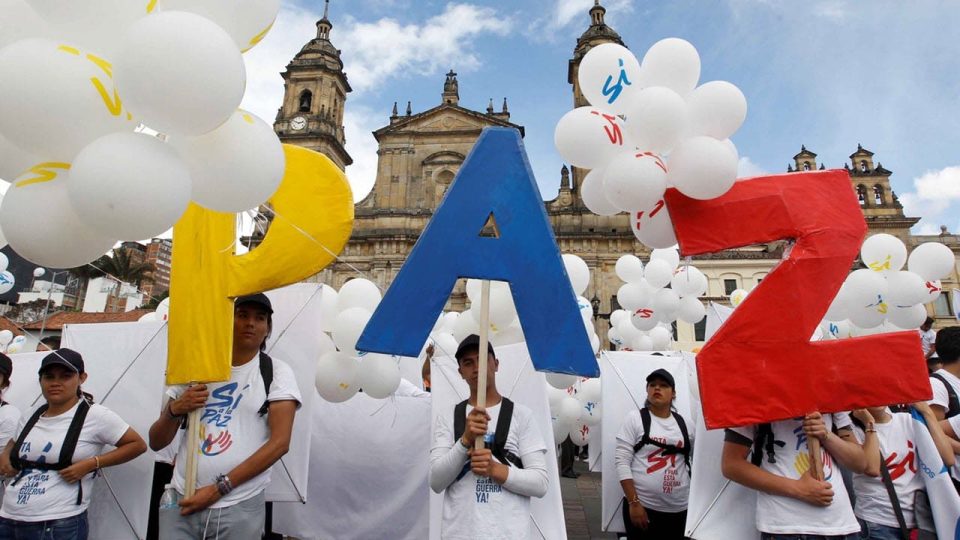
The Peace Agreement in Colombia is one of the most significant events in the country’s recent history. Signed in 2016 between the Colombian government and the Revolutionary Armed Forces of Colombia (FARC), it marked the end of more than five decades of armed conflict that caused countless victims and displacements. This agreement sought not only the demobilization and disarmament of combatants, but also the reintegration of former guerrillas into civilian life and reparation for victims of the conflict.
Historical Context
Origins of Conflict
The armed conflict in Colombia has deep roots dating back to the mid-20th century. Tensions between the government and various insurgent groups, including the FARC, emerged from a combination of political, social and economic . Inequality in land distribution and political exclusion were important catalysts that led to the formation of the FARC in 1964.
Escalation of the Conflict
Over the following decades, the conflict escalated significantly. The FARC, along with other guerrilla groups such as the National Liberation Army (ELN), carried out a series of attacks and kidnappings. For its part, the Colombian government responded with military operations, resulting in a cycle of continuous violence.
Previous Peace Attempts
Before the 2016 agreement, there were several failed peace attempts. The most notable were the negotiations during the governments of Belisario Betancur in the 1980s and Andrés Pastrana in the late 1990s. These attempts failed to end the conflict, but laid the groundwork for future negotiations.
The Negotiating Process
Beginning of the Negotiations
The negotiation process that led to the Peace Agreement in Colombia formally began in 2012 in Havana, Cuba. President Juan Manuel Santos and the leadership of the FARC agreed on a framework of negotiations that included six key points: rural development, political participation, end of conflict, solution to the problem of illicit drugs, victims and implementation and verification mechanisms.
Development of the Conversations
For four years, government and FARC delegations worked on drafting agreements on each of the key points. There were highs and lows, including periods of suspension of talks due to the persistence of violence. However, both sides showed an unwavering commitment to achieving peace.
Signing of the Agreement
On September 26, 2016, the Peace Agreement in Colombia was signed in Cartagena. This event was witnessed by world leaders and international organizations, symbolizing a new chapter in the history of Colombia. The agreement was subsequently submitted to a plebiscite in which it was rejected by a narrow margin. This led to further negotiations and adjustments to the agreement, which was finally ratified by Congress in November 2016.
Components of the Peace Agreement in Colombia
Integral Rural Development
One of the pillars of the agreement is rural reform, which seeks to reduce inequalities in the countryside and improve the quality of life of peasants. This includes the provision of land to landless peasants, the development of rural infrastructure and the promotion of sustainable productive projects.
Political participation
The agreement guarantees the inclusion of the FARC in the Colombian political process. This materialized with the creation of the political party Revolutionary Alternative for the Common (also known as FARC) and the allocation of seats in Congress for ex-combatants.
End of Conflict
This component includes the demobilization and disarmament of FARC combatants, as well as their reintegration into civilian life. It also provides for security measures to prevent the reactivation of violence, as well as the creation of verification and monitoring mechanisms.
Solution to the Illicit Drug Problem
The agreement addresses the problem of illicit drugs from a public health and development perspective. Coca crop substitution programmes are promoted for legal alternatives, as well as strategies to reduce drug demand and trafficking.
Victims
One of the most innovative aspects of the agreement is its focus on the victims of the conflict. It includes comprehensive reparation measures, such as the establishment of the Truth Commission, the Missing Persons Search Unit and the Special Jurisdiction for Peace (JEP), which are responsible for investigating and prosecuting crimes committed during the conflict.
Implementation and Verification
The agreement establishes mechanisms for the implementation and verification of its points. This includes the establishment of a National Reintegration Council, which oversees the reintegration of ex-combatants, and the cooperation of the international community to ensure the implementation of commitments.
Impact of the Peace Agreement on Colombia
Social and Economic Benefits
The signing of the Peace Agreement has had a positive impact in a number of areas. At the social level, it has allowed for the reduction of violence and the return of displaced communities to their places of origin. Economically, it has opened up opportunities for rural development and investment in regions previously affected by conflict.
Challenges in Implementation
Despite the progress, the implementation of the agreement has faced numerous challenges. The persistence of violence by other armed groups, the lack of resources to finance reintegration and rural development programmes, and political resistance are some of the obstacles that have hampered the peace process.
The Role of the International Community
The international community has played a crucial role in supporting the peace process in Colombia. The United Nations, the European Union and several countries have contributed financial and technical resources to the implementation of the agreement. In addition, the presence of international observers has been instrumental in ensuring the transparency and credibility of the process.
Some questions to summarize the Peace Agreement in Colombia
What is the Peace Agreement in Colombia?
The Peace Agreement in Colombia is a treaty signed in 2016 between the Colombian government and the FARC, aimed at ending more than 50 years of armed conflict. The agreement covers reforms in areas such as rural development, political participation, end of conflict, solution to the illicit drug problem, and reparation for victims.
What are the main points of the Peace Agreement in Colombia?
The main points of the Peace Agreement in Colombia include:
- Comprehensive rural development
- Political participation
- End of the conflict
- Solution to the illicit drug problem
- Reparation and rights of victims
- Implementation and verification
What happened to the FARC after the Peace Agreement in Colombia?
After the Peace Agreement, the FARC demobilized and handed over its weapons. Many ex-combatants have reintegrated into civilian life, and some have joined politics through the Common Revolutionary Alternative Force party. However, the implementation of the agreement has been complicated by the persistence of other armed groups and the lack of resources.
How has the Peace Agreement in Colombia affected the victims of the conflict?
The Peace Agreement in Colombia includes a comprehensive approach to reparation for victims. This has materialized in the creation of the Truth Commission, the Missing Persons Search Unit and the Special Jurisdiction for Peace (JEP), which are working on the search for justice and reparation for the victims of the conflict.
What challenges does the implementation of the Peace Agreement in Colombia face?
The implementation of the Peace Agreement faces a number of challenges, including the persistence of violence by other armed groups, the lack of financial resources for reintegration and rural development programmes, and political resistance. These obstacles have made it difficult to fulfil the commitments of the agreement.
Conclusion
The Peace Agreement in Colombia represents a monumental effort to overcome decades of conflict and build a future of peace and development. While there has been significant progress, the full implementation of the agreement remains a challenge that requires the continued commitment of government, local communities and the international community. The success of the agreement depends to a large extent on Colombia ' s ability to address the structural problems that gave rise to the conflict and to ensure lasting peace for all its regions and inhabitants.
Bibliographical References
- Truth Commission (2021). Final Report: The Truth of the Odeen in the Colombian Armed Conflict. Available at: www.comisiondelaverdad.co.
- National Centre for Historical Memory (2018). Enough: Colombia Memories of War and Dignity. Available at www.centrodememoriahistorica.gov.co.
- United Nations (2016). Report of the Secretary-General on the United Nations Verification Mission in Colombia. Available at www.un.org.
- Santos, J. M. (2019). The Battle for Peace. Editorial Planeta.
- Garcia, M. (2017). The Peace Process in Colombia: Challenges and Opportunities. Revista de Estudios Internacionales, 49(2), 87-110.
